Fall Fertilization of Southern Pastures and Hayfields: Spend Fertilizer Dollars Wisely
Aug 20, 2026
By Zane Troxtel, GreenPoint Ag Agronomist - Pasture and Range Specialist
For producers in the South, fall is one of the most important times to manage pasture and hayfield fertility. The goal is not just to apply fertilizer, but to apply the right nutrients at the right time and rate.
Soil Testing
Many producers wait until the spring growing season to perform soil testing. However, to get the most “bang for your buck,” performing soil fertility testing in the fall can pay off for several reasons.
Always start with a soil test! In many cases, your local retail location is already performing soil testing for row-crop farmers after harvest. This usually begins in late August or early September. Getting on the list to have your samples pulled while they are in your area can help ensure the test is completed before you need to apply lime or other nutrients ahead of winter.
Timing is more important than you may realize when it comes to soil testing. For example, if you pull your test in April and discover that your pH is low and lime is recommended, you are already in the growing season. Lime can take several months to react in the soil and make an impact on nutrient uptake.
The chart below shows why soil testing and applying lime in the fall matter. When soil pH is low, nutrients may not be utilized properly, meaning money can be spent at the wrong time without providing the full benefit.
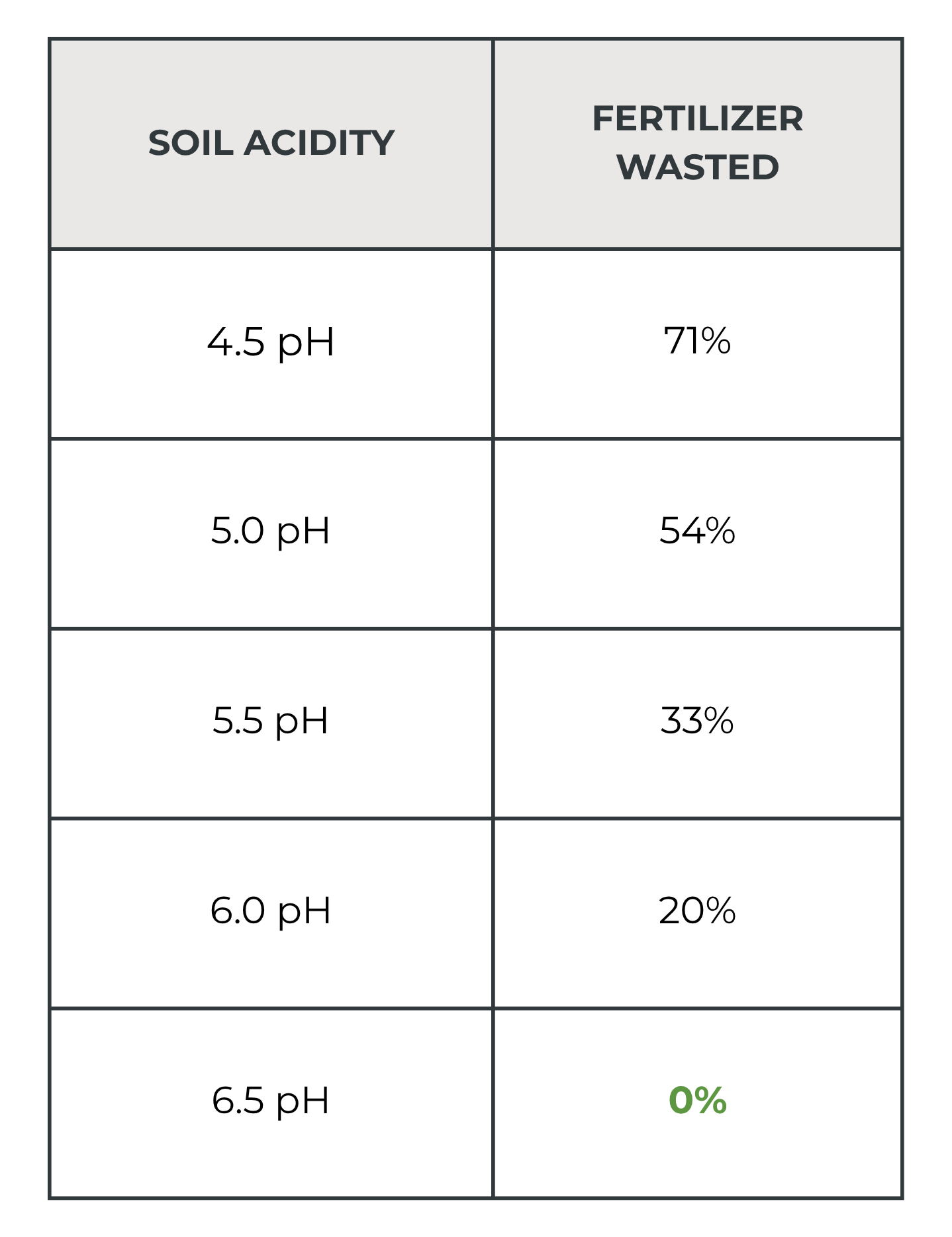
Source: Tennessee Valley Resources, Inc.
What Nutrients to Prioritize
When you receive your soil test results, apply lime it calls for to make pH corrections, and remember that applying nutrients your pasture does not need wastes money. Correcting a deficiency, however, can provide a return through forage production that fall and spring. If your soil test calls for phosphorus and potassium, look at the rate and consider split applying them in the fall and spring instead of applying everything at one time.- Phosphorus is important for root development and plant establishment. Any established grass that has been through periods of summer stress or is going to experience a hard winter will need help with better root development over winter for better nutrient uptake the next spring.
- Potassium is especially important for maintaining plant vigor, winter survival, drought tolerance, and overall forage quality and production. If the plant’s immune system is compromised, nutrient uptake the next spring is less than it could be with a strong plant.
Pastures that are heavily grazed remove significant amounts of potassium from the system. If a soil test indicates low potassium, correcting the deficiency can be just as important as supplying nitrogen. Split-applying fertilizer in the fall and spring can have the nutrients already in the soil over the winter, and split applying more when the plant is ready in the spring could be more beneficial than putting it all out in the spring.
- Nitrogen is often the nutrient that drives the greatest response in cool-season forages, such as:
- Tall fescue
- Annual ryegrass
- Winter wheat
- Cereal rye
- Oats
- Other cool-season grasses
Fall nitrogen can help establish a strong stand, increase forage production, and build a forage base for winter grazing. Apply nitrogen based on your forage, expected yield, weather, and grazing objectives—not simply because it is fall.
Timing
Timing is everything when it comes to testing, application, and removal, whether it be rotational grazing, continuous grazing, or hay. Applying nutrients is no different. Applying them at the wrong time can cost you money.This is where your local agronomist or crop advisor can help with your test and applications!
Common Mistakes:
- Fertilizing without a soil test
- Not making sure pH is taken care of first
- Applying too much nitrogen without balance of other nutrients
- Forgetting potassium
- Applying fertilizer without considering the weather—make sure you have moisture
The Bottom Line
Test the soil. Correct the pH. Apply the nutrients your pasture needs. Time applications with plant growth and weather. Then manage grazing to protect the forage you worked—and paid—to produce.Healthy soil → Healthy forage → Healthy cattle → More grazing days → Better returns