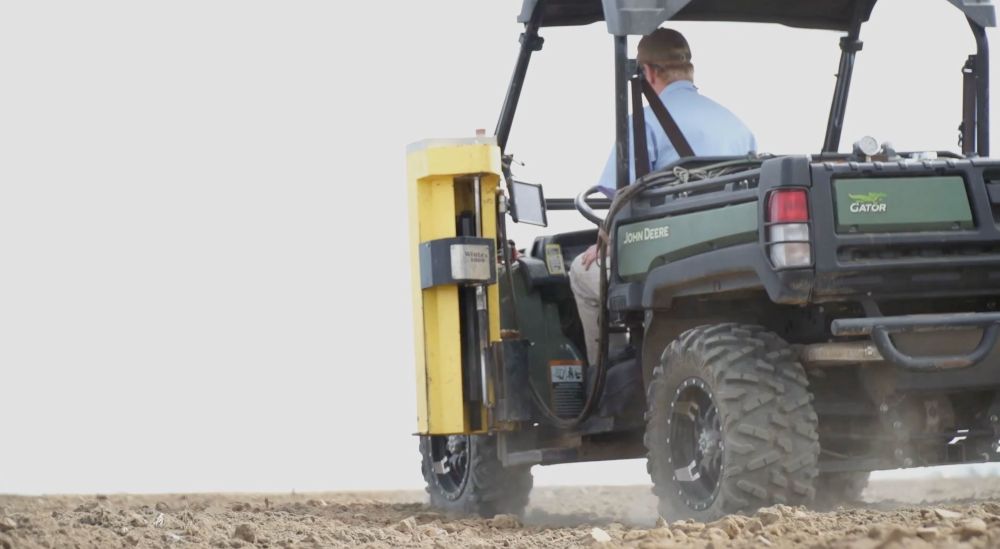
From the ancient Mesopotamians three millennia ago to the 19th century German scientist, Justus von Leibig, to the introduction of the U.S. Cooperative Extension Service in 1914, the science and technology of soil sampling has continued to evolve. The ancients recognized the role of fertile ground in successful harvests, Leibig developed the groundwork for modern soil science, and the Extension Service made the process available to any U.S. farmer.
But just over the past few years, the science of soil sampling has taken even a greater leap forward. With today’s tools, such as geographic information systems (GIS) mapping and software programs like GreenPoint Ag’s AccuField, precision ag technology is allowing farmers of all sizes and crops to make informed decisions about how and where to apply soil nutrients. For more than a decade, AccuField has combined precision soil sampling, variable rate application, agronomics, yield data, site-specific hybrid selection and data management to provide farmers with once-unimaginable decision-making tools.
Trey Colley, GreenPoint Ag Senior Manager for Advanced Services, says there is no longer a “barrier to entry” as it relates to precision agriculture and in particular, soil sampling.
“I think that there’s a bit of misconception out there that [a farmer] must have the newest, top-of-the-line fertilizer equipment to be able to benefit from these precision sampling and variable rate technologies,” says Colley. “But the simple fact is that whether you’re a 5,000-acre row-cropper or a 50-acre hay producer — and everywhere in between — there is an element of AccuField that can fit your farm. For those 50 acres, no matter what you have on it, the goal should be quality samples, quality interpretation from the soils lab, and a quality plan to address the issues."
Colley says deficiencies in the soil nutrition of a field can present in several ways, most notably by visual inconsistencies in the biomass (plant materials) that are growing there.
“Not including obvious areas of poor drainage or limited sunlight, you often see a variety of growth patterns of the biomass in a field with poor soil nutrition,” he says. “This may not always be easy to see from the ground but can be plainly obvious when looking at a geospatial sampling map. If the field had a perfect pH, fertility, and uniform water throughout, then that crop should be uniform, which is the ultimate goal of soil sampling.”
In today’s precision agriculture, there are generally three soil-sampling techniques: composite, grid, and zone. Colley says that composite sampling is the “entry level” technique and can be effective for even a small farm.
“With composite sampling, we’re usually only pulling one, maybe two, samples per field,” he explains. “We process those results through AccuField and are able to then recommend an optimized fertilizer blend to meet the specific economic and productivity goals for that farm. We are basically adding refined technology and data processing techniques to what has traditionally been a fairly basic system of sampling.”
Grid and zone sampling, Colley points out, create an even more detailed view of the soil qualities of a particular field.
“Grid sampling is normally based on two-and-a-half acre or five-acre grids,” he says. “For example, if you have a 25-acre field and you elect to use five-acre grids, five samples will be pulled from that field. Then, a map of the lab results will come back to the customer and their retail or Co-op along with a detailed fertilizer recommendation.”
Zone sampling uses historical yield data and plant health indicators to segregate a field into areas of low, medium, and high productivity areas, and addresses the fertility needs of each zone accordingly.
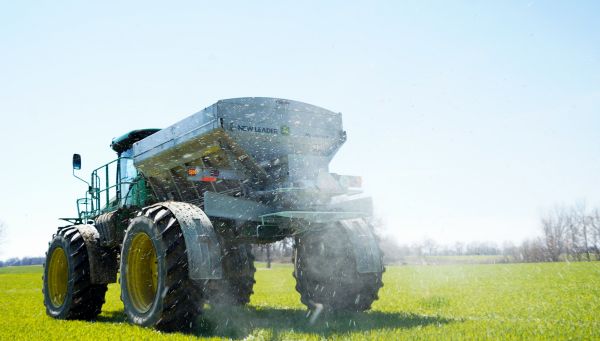
“With zone sampling, we may know that our low-producing areas in a particular field are in a wet bottom or have a sandy vein that runs through them,” Colley says. “In that case, it’s clear that this area will likely never have the yield potential to make a good crop, so we’re not going to fertilize it as if it will. Those fertilizer dollars can then be shifted to the medium-producing areas to see if we can push it into being a high-producing zone. On the already high-producing areas, we’re looking at that and saying, ‘That’s all this ground is capable of, and we can’t push the yield any further,’ and we would recommend only applying the amount of fertilizer that the crop will remove over the growing season in order to maintain soil test levels. All said and done, you’re basically spending the same amount of money as you would if you just spread a traditional blend of fertilizer everywhere, but you’re getting the benefit of a spatial allotment of those nutrients to address these various productivity zones and optimizing your budget.”
Colley says that the traditional “sample every three years” works in certain areas, but advises customers and retail or Co-op staff to do the math and make sure crop removal is accounted for in between sampling intervals. In recent years Colley has seen benefits from sampling annually.
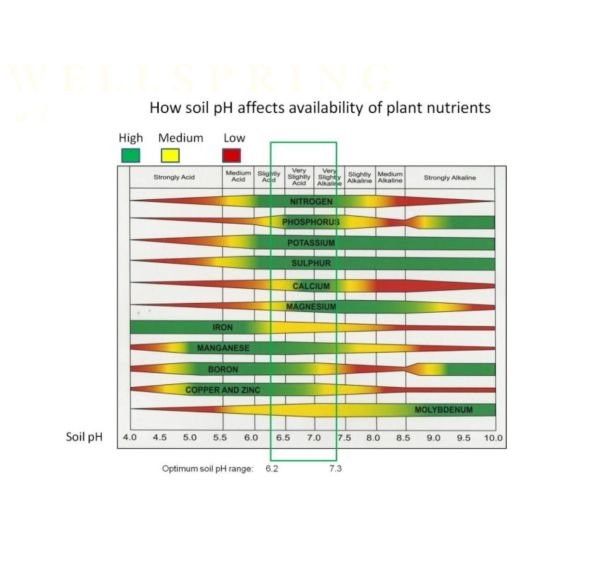
“Modern hybrids are removing more fertility from our soils than ever before as yields increase every year,” he says. “By sampling annually, that customer gets the opportunity to check and make sure they didn’t remove more fertility with the crop than the yield goal we fertilized for in the previous year. In an annual sampling cycle, often we are spending essentially the same amount of money on lime as we would every third year, but spreading it out and making it more digestible by having that as an annual part of the budget instead of a big hit every fourth year.”
By Mark Johnson