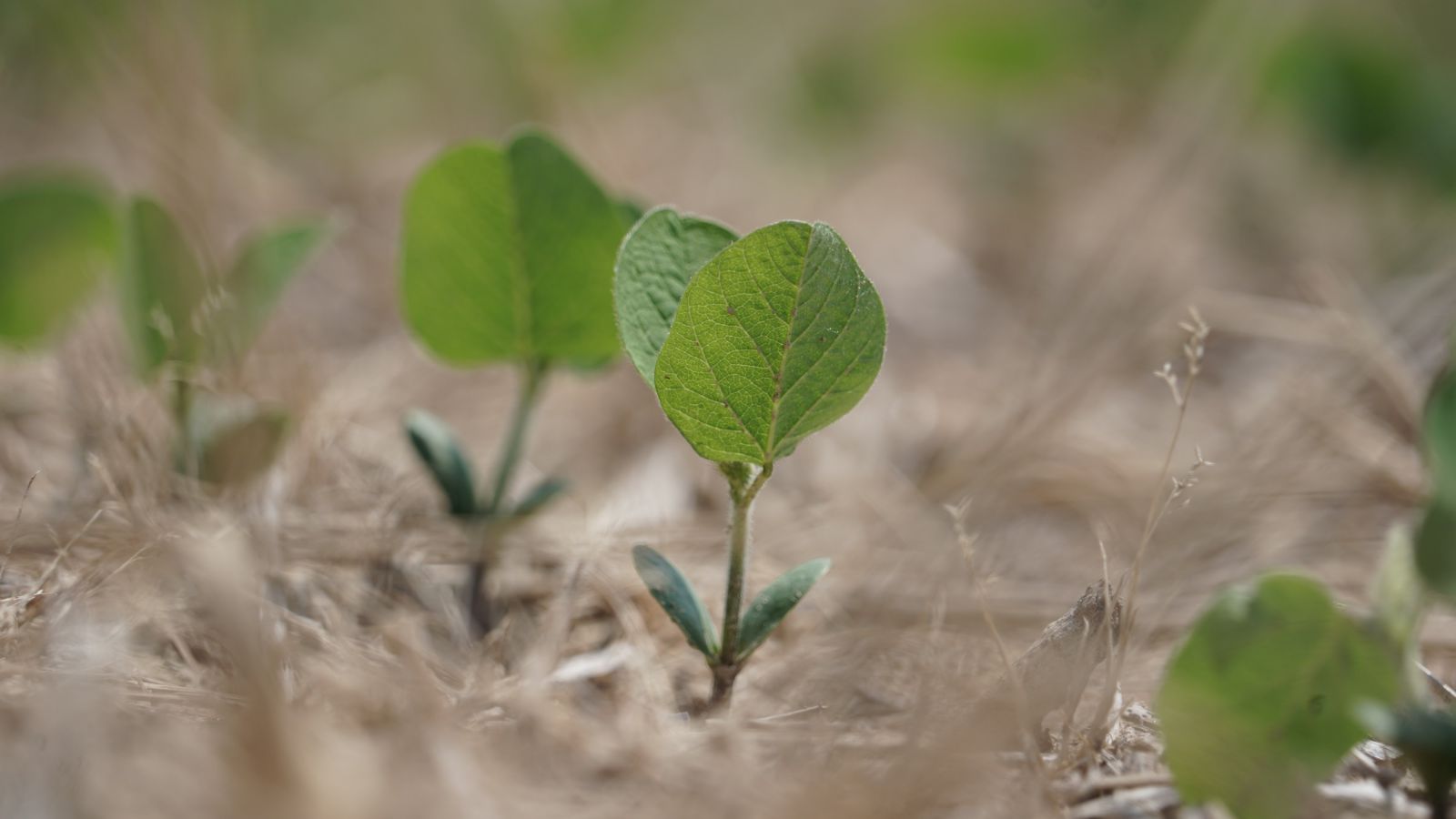
Spring is here , planters are rolling in pockets of the South , and there is another thunderstorm in the 10-Day forecast. Our neighbors to the north are experiencing devastating floods along the Missouri River , the Mississippi River is rising and we have fields in the Mississippi Delta that look like it’s still duck season minus the decoys. All of this water has me thinking about fertilizer applications , and more specifically , nitrogen fertilizer and the potential to lose it if we don’t protect it.
We all know that nitrogen is important for plant growth and development. In fact , most would argue that nitrogen is the most important nutrient a crop needs - the MVP of your fertility program’s team. It is , after all , the nutrient responsible for a plant’s green color , and we know if a plant isn’t green , then we have already lost yield potential. However , nitrogen is not the Tim Tebow of nutrients; it is not always well-mannered regardless of the conditions you put it in. Nitrogen is finicky , and it won’t behave the way you want it to if left unchaperoned – especially with a wet spring in the forecast. Let’s dive into the science between nitrogen and water.
4 Forms of Nitrogen in Fertilizers
Urea and UAN (Urea Ammonium Nitrate) are great sources of nitrogen; however , in order to understand nitrogen loss , it’s important to understand their plant availability. Plants take up nitrogen in two major forms: ammonium (NH3+) and nitrate (NO3-). Urea (CH4N2O) is not immediately plant available. Once urea is incorporated or has been watered into the soil , it breaks down into ammonium through a process called urea hydrolysis. Once in the ammonium form , a plant can take it up. UAN is unique in that it contains part urea , part ammonium , and part nitrate. The ratios of each depend on if you are using UAN 28% or UAN 32%. Remember , the urea part must be broken down into ammonium before the plant can take it up , but the 2 parts ammonium and nitrate are plant available upon contact with a root.
That was a lot of chemical formulas (Cs , Hs , Ns , and Os). If those sound like Greek , then remember these two things:
1. If a molecule has a + on it , then it is less likely to leach. If it is negative (-) , then it has a high chance of leaching. Ammonium is positive. Nitrate is negative.
2. Urea must be broken down to be taken up by the plant , but that doesn’t mean nitrogen can’t be lost in urea fertilizer.
4 Forms of Nitrogen Loss
Denitrificationoccurs when soils become waterlogged , seen currently occurring in the Mississippi Delta. Soil bacteria need oxygen to survive. When soil is waterlogged , the bacteria steal the 3 oxygen molecules from Nitrate (NO3-) molecules , and the N in the NO3- is lost.
Leaching occurs when water percolates or moves through the soil , taking a nutrient with it. Nitrate (NO3-) is negatively charged and soil is negatively charged. When gravity moves water down the soil profile , it takes negatively charged nutrients with it. Sulfur , boron , manganese , and chlorine are also water soluble; therefore , prone to leaching. Leaching is currently occurring where we are getting rain. If you planted and spread N behind the planter last week and then got a rain but didn’t stabilize your nitrogen , it could be leaching as you read this.
Volatilization occurs when urea from animal manure or urea fertilizer is applied to the soil surface during warm temperatures or on high pH soils. (I’m talking to you , today , Texas and South Louisiana! Your temperatures are high enough for volatilization without stabilization.)
Immobilization occurs when nitrate (NO3-) and ammonium (NH4+) are taken up by soil microbes as food – making it unavailable for plant uptake.
The Nitrogen and Water Relationship
Nitrogen fertilizers and water have a relationship like Goldilocks and the Three Bears. Urea and UAN (Urea Ammonium Nitrate) are no exception as neither can handle too much or too little rainfall. It needs to be just right. Urea is a dry fertilizer that can be spread on top of the soil or plowed into the ground. When left on top of the soil , urea is subject to volatilization. UAN is a liquid fertilizer than can also be placed on top of the soil or knifed into the soil. Both are subject to volatilization if applied to the soil surface. We can prevent this volatilization by using a product with a urease inhibitor (NBPT) such as Anvol®. Anvol® has an added active ingredient Duromide™ , which protects the NBPT. Now we’re talking! A protector to protect our nitrogen protector! That’s a lot of protection!
Now what about if you incorporate Urea or UAN into the soil? It’s not guaranteed safe either. Once Urea breaks down into ammonium and then to nitrate , it’s subject to leaching. For UAN , the product is in all three forms: urea , ammonium , and nitrate. The nitrate in UAN is leachable. Too much rainfall can subject nitrate to leaching out of the root zone or lead to denitrification in waterlogged soils. Agrotain®Plus SC contains NBPT for above ground protection and DCD for below ground protection. The DCD works to keep the nitrogen in the ammonium form once in the soil by preventing soil bacteria (nitrosomonas) from converting the positively charged ammonium into the negatively charged nitrate. If you’re spreading fertilizer yourself and don’t want to buy a separate product to protect your fertilizer , Super U® is a urea fertilizer that comes integrated throughout the granule with NBPT and DCD.
Ready to stabilize your next load of nitrogen? Talk to your local GreenPoint AG salesperson.
This article written by Sara Smelser , Agronomist. If you have questions regarding the nitrogen cycle or nitrogen loss , feel free to reach out at sara.smelser@greenpointag.com or tweet her @ladyntheplants
Agronomy
What Nitrogen And Tim Tebow Have In Common
Want help thinking through your acres?
Talk with a GreenPoint Ag agronomist who works in your region. Local knowledge, applied to your operation.