Stronger Weed Control. Fewer Resprays. Higher ROI.
Are your herbicides working as well as they should?
If you’re farming in the Southern U.S., you know weed pressure is relentless. Hard to kill weeds like Palmer amaranth, tall waterhemp, and morningglory thrive in our hot, humid conditions and many of the grasses we have managed easily for years are now becoming difficult to control. But here’s the thing: It’s not just the weeds. Hard water, waxy leaves, and unpredictable weather can affect herbicides before they have a chance to work. If you’re struggling with inconsistent weed control, the problem may not just be your herbicide—consider what’s in your spray tank.
Why is Weed Control so Challenging in The South?
- Long growing seasons mean more weed flushes.
- Hard water from wells and surface sources ties up many herbicides, reducing effectiveness.
- Thick cuticles on the leaves of weeds block herbicide absorption.
- Afternoon pop-up storms wash herbicide off before it’s absorbed.
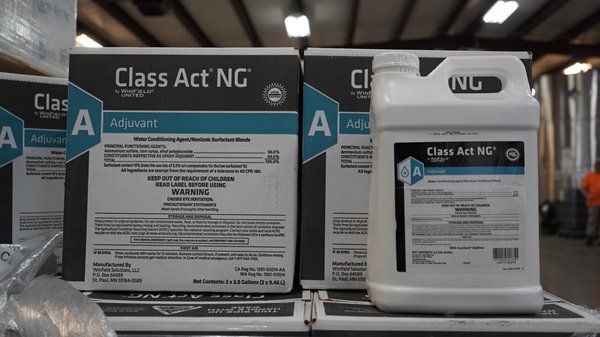
Class Act® NG® was engineered to address these challenges.
5 Ways Class Act® NG® Gives You a Weed Control Advantage
1. Fighting Hard to Kill Weeds? Make Sure to Deliver a Lethal Dose
Weeds like Palmer amaranth, Italian ryegrass, and goosegrass are getting tougher to kill. If the herbicide you are applying doesn’t penetrate the leaf surface, it can’t do its job.
How Class Act® NG® Helps:
- Non-ionic surfactant breaks the surface tension of spray droplets allowing them to spread out on leaves instead of rolling off
- Humectant pulls moisture from the air keeping spray droplet in liquid form longer to increase uptake
- Ammonium sulfate (AMS) helps herbicide penetrate leaf cuticle
- Increased uptake of herbicide leads to faster and more complete weed control
2. Hard Water Hurting Your Herbicide? Condition It with Class Act® NG®
Farms in the South pull water from wells, ponds, reservoirs, and municipalities for use in herbicide applications. The pH of these water sources varies greatly, and they have cations like calcium, magnesium, and iron that bind with commonly used herbicides reducing their effectiveness. Glyphosate and glufosinate are particularly sensitive to ‘hard water’.
How Class Act® NG® Helps:
- AMS binds hard water ions, keeping herbicide available
- Prevents herbicide deactivation, so you get the full power of your application
- Improves spray water pH, extending the viability of herbicide activity
Tip: OSU Extension recommends always adding AMS before glyphosate and glufosinate to ensure full potency.
3. Rain in the Forecast? Don’t Let a Pop-Up Storm Steal Your Spray
If herbicide isn’t absorbed into the leaf before a rain event occurs, it washes right off, wasting your investment.
How Class Act® NG® Helps:
- Speeds up herbicide absorption, reducing rainfast time
- Ensures more active ingredient gets into the plant before a storm
- Protects your application from unpredictable weather
4. Uneven Spray Coverage? Get Consistent, Even Control
Poor spray coverage leads to patchy weed control, increasing the risk of resistant weeds.
How Class Act® NG® Helps:
- Optimizes droplet size, reducing bounce-off
- Ensures even distribution, so every weed gets the same lethal dose
- Pair with InterLock for drift control and canopy penetration
5. Rising Herbicide Costs? Reduce Resprays & Increase ROI
With input costs at all-time highs, every drop of herbicide counts. Class Act® NG® helps you get the most out of every spray application.
How Class Act® NG® Helps:
- Prevents glyphosate and glufosinate deactivation, ensuring full-strength weed control
- Improves translocation, leading to faster, more complete weed kill
- Reduces resprays, saving time, fuel, and labor
Bottom Line: Stronger herbicide performance = fewer resprays, lower costs, and higher yields.
By incorporating Class Act® NG® into your herbicide applications, you can tackle persistent weed challenges more effectively. For more tailored advice to your fields and product availability, reach out to your local GreenPoint Ag sales representative.